

Bachelor of Design (Honours)
B.Des (Hons.) is a UGC-approved degree programme offered by O.P. Jindal Global University at The Design Village campus. The undergraduate programme prepares students for the competitive design profession through its focus on interdisciplinary awareness, industry-centric competencies, and extensive immersive learning.
Students are taken through an award-winning curriculum as recognized by the Don Norman Design Award, offering access to industry-grade labs and machinery across Noida’s industrial area, and made to actively participate in
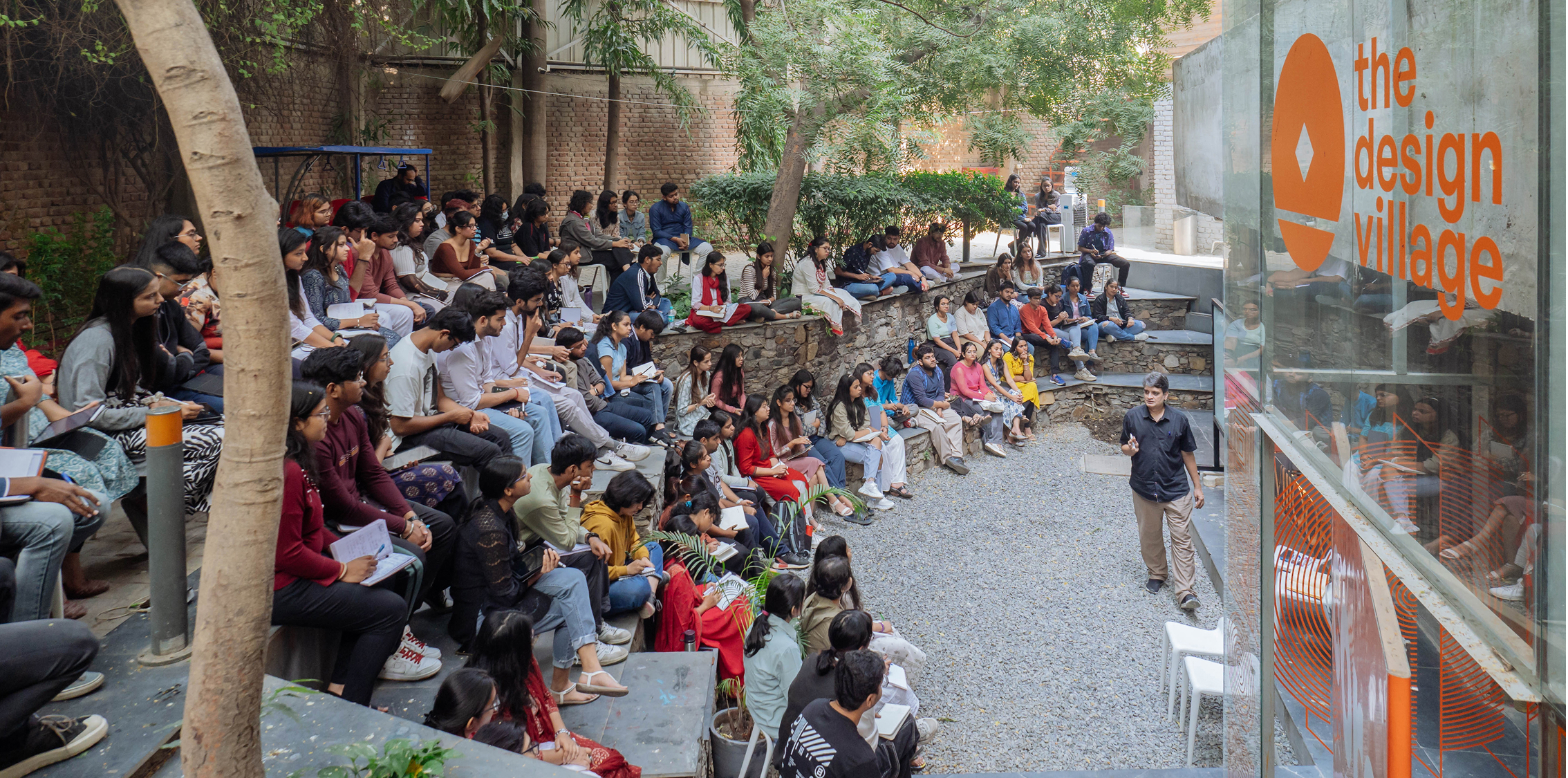
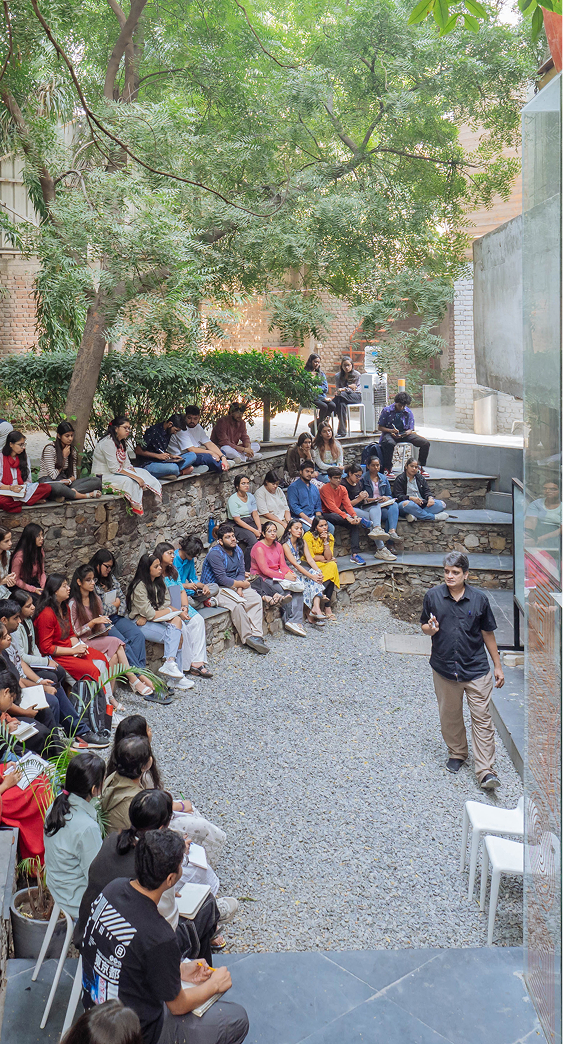
off-campus experiential learning courses
To gain an unmatched international exposure, B.Des (Hons.) students attend a two-month Creative Residency at TDV’s Milan Campus in Italy during the third year of their programme, all costs (tuition, visa, travel, accommodation, meals etc.) for which are built into the programme fee.
Format
Degree awarded by
Classes begin
Eligibility
Duration
Course Fee
(HIGHLIGHTS)
WHY Study at
the Design Village

INSTITUTION BY THE INDUSTRY
Design School founded by prominent designers from India and Europe, with an intent to offer world’s best design education to Indian students, every decision at TDV, including curriculum, culture, partnerships etc. is shaped through a designer’s lens

CREDIBILITY AND RECOGNITION
Degree conferred by OP Jindal Global University (JGU), recognized as one of the twelve Institutions of Eminence (IoE) by Government of India, along with select IITs, BITS etc., and ranked #1 Private University in India by QS rankings for 3 years in a row

LOCATIONAL ADVANTAGE
TDV is located in the urban core of NCR, in a neighbourhood buzzing with artisans and craftspeople, allowing students to step straight into the world of design, fashion and media, through self-paced freelancing, internship and networking opportunities
UNDERGRADUATE CREATIVE RESIDENCY
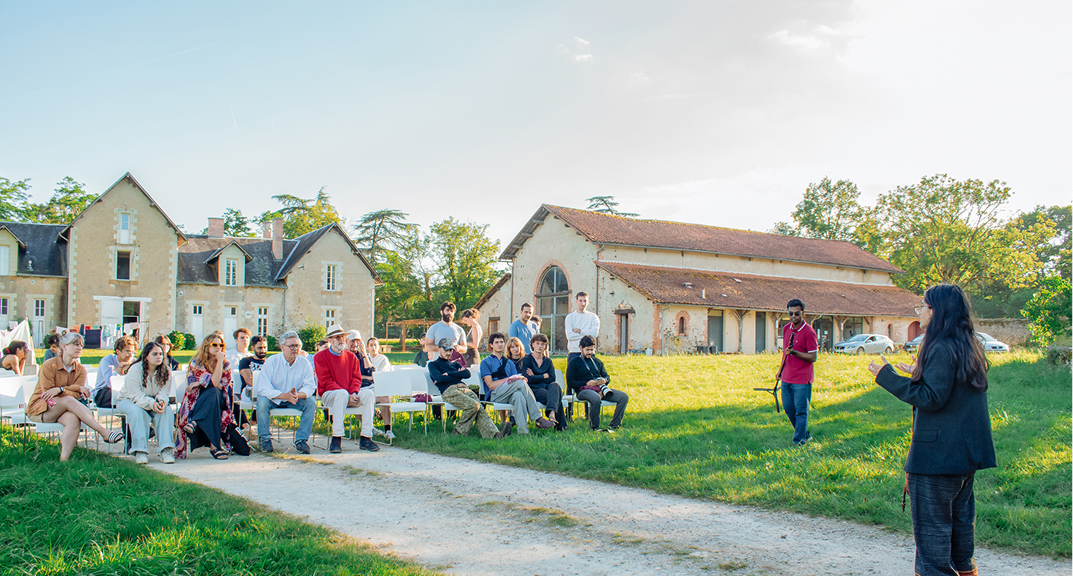
Experience an all-inclusive 2-month Creative Residency at TDV’s Campus in Milan, immersing yourself in the world’s leading hub of fashion, product and space design, and drawing inspiration from Italy’s rich creative heritage
(EDUCATION)
SPECIALISATIONS
Students gain global exposure through a fully funded two-month Creative Residency in Milan, ensuring strong technical skills and international perspectives.
Career Pathways
Career Pathways
Career Pathways
Career Pathways

Career Pathways

Career Pathways
(CURRICULUM)
Industry-centric Curriculum
- SEM 01
- SEM 02
- Sem 03
- SEM 04
- SEM 05
- SEM 06
- SEM 07
- SEM 08
CODE
CREDITS
Course Title
BDE101
10
Students come from different social and cultural environments. The course helps students to put aside the conventional ways of doing things, reimagine one’s position and create an openness to the world of design.
BDE102
2
Designers must understand the world and its realities, to be able to design appropriately. The course introduces students to different realities: gender, religion, family structures, cultural practices etc.
BDE103
2
All steps towards designing have far-reaching implications: intended and unintended, short-term and long-term, on the self and on the collective. In this course, students research and map past designs, understand factors that lead to various implications, and strengthen their lateral thinking.
BDE104
2
The course takes students through an explorative, iterative, critically-reflective methodology, and encourages them to articulate, speculate and present their worldview from choosing between multiple mediums.
BDE105
2
Coming from the discipline of anthropology, ethnography helps understand the multi-facets of culture. The course introduces students to the ground reality of the world using this qualitative research method.
BDE106
2
Designers need to develop the ability to infer and contextualize the elements and principles of design. Elements are basic set of tools on which design is created, while principles of design relate to how you use these elements. The course helps students develop a basic understanding of the elements and principles, and translate that understanding into projects.
BDE107
5
Project-based course based on an approach in which calculated predictions are made through visible patterns and trends. Designed as an intense sprint with a speculative brief, it is aimed to create new ideas and solutions for the present that involve thinking through the future.
BDE108
5
Workshop-based course in which students work on projects involving more than one discipline or field of study in order to understand how to collaborate with different knowledge systems.
CODE
CREDITS
Course Title
BDE201
10
Educational excursion to co-learn from your peers and mentors, working together and living in conditions beyond a city for long-term bonding.
BDE202
2
From an already identified target audience, designers need to explore the integration of purpose and storytelling into their design concepts. The course fosters a holistic approach to ideation, encouraging students to empathize with the users ranging from micro-details to the overarching strategy for a user journey.
BDE203
2
The course introduces students to design by using a series of sequential steps with multiple kinds of predetermined flows, to arrive at design solutions.
BDE204
2
Designers have to work at many scales and with varied stakeholders with vested interests. The course equips students to identify these stakeholders and understand that different concerns, needs, attitudes and opinions they have.
BDE205
2
A context to begin with, will always have more than one variable to study, be it through space-based documentation techniques or of any other sensorial kinds. In this course, the learner maintains an objective viewpoint by applying rational and quantitative learnings to present an analysis of the context.
BDE206
2
By exploring the interplay through materials and techniques, the course helps students develop a nuanced understanding of how materials can convey meanings, evoke emotions and generate experiences for an observer. It enhances a student’s ability to effectively communicate through materials and their manifestations.
BDE207
5
Short intensive project on space and interior and textile brands, helping students understand the industry, audiences, and value propositions.
BDE208
5
Project-based course that encourages students to develop an idea through a reflective design process, understanding how to reframe a project brief to see possibilities.
CODE
CREDITS
Course Title
BDF301
6
Designers must develop grounding and humility to be empathetic in this endeavour. The course fosters a sense of social responsibility and ethical design practice. Through community service projects, students develop a deeper understanding of societal needs and learn to apply design to serve the community.
BDF302
4
The course introduces notions of ethics, morals and values through a variety of philosophers, designers, and critical inquiry involved in the process of creation and decision-making. It equips students with the tools and knowledge to create responsible and ethical design solutions that contribute positively to society.
BDF303
4
Context-driven and interaction-centred approach that helps students learn a way to come up with solutions that give people meaning or value.
BDF304
2
Design thinking begins with material literacy. This course establishes the foundational understanding that materials are not passive recipients of form but active participants in meaning-making. Students learn to read materials for their expressive potential, structural logic, and cultural significance, developing the intelligence to choose and work with materials as intentional design decisions rather than default options.
Communication & Interaction: Materials and Medium
Fashion & Textile: Textile Construction
Interior & Space: Poetics of Space
Product & Industrial: Material and Making
Strategic Design & Management: Business Innovation
Transdisciplinary Design: Choose from 40+ options across all silos
BDF305
2
Design maturity requires understanding transformation and layering. This course builds the capacity to manipulate, enhance, and add complexity to foundational elements. Students develop the judgment to know when and how to intervene in materials, spaces, interactions, or systems, learning that design is as much about considered restraint as it is about addition and ornamentation.
Communication & Interaction: Creative Coding
Fashion & Textile: Dyeing, Prints and Surface Ornamentation
Interior & Space: Light & Space
Product & Industrial: Human-Product Interaction
Strategic Design & Management: Consumer Behaviour
Transdisciplinary Design: Choose from 40+ options across all silos
BDF306
2
Design realization demands structural and systematic thinking. This course cultivates the ability to move from idea to execution with technical confidence, understanding that form, construction, and production are not constraints but integral to design intention. Students learn to think through making, recognizing that how something is built fundamentally shapes what it communicates and how it performs.
Communication & Interaction: Animation
Fashion & Textile: Pattern Making and Garment Construction
Interior & Space: Structures
Product & Industrial: Form and Manufacturing
Strategic Design & Management: Project Management
Transdisciplinary Design: Choose from 40+ options across all silos
BDF307
2
Design communication extends beyond the object itself. This course develops the capacity to translate complex ideas into clear visual and analytical narratives. Students learn that representation is not merely documentation but an act of interpretation and persuasion, building fluency in the languages needed to share their work, defend their decisions, and understand the contexts in which design operates.
Communication & Interaction: Media for Communication
Fashion & Textile: Fashion Illustration
Interior & Space: Space Drawings
Product & Industrial: Product Illustration
Strategic Design & Management: Data Analytics
Transdisciplinary Design: Choose from 40+ options across all silos
BDF308
4
BDF309
4
CODE
CREDITS
Course Title
BDF401
6
Experiential course to encourage students towards exploring the world through active engagement, experimentation, and stepping outside one’s comfort zone to develop resilience.
BDF402
4
Exploring the intersection of culture, society and design, the course helps students build cross-cultural perspectives, and develop the ability to be culturally sensitive in their design approach.
BDF403
2
Designers must have an understanding of consumer behaviours that affect the decision-making process, extrinsic motivations, and other psychological factors. The course teaches students to identify target audiences and develop a general knowledge of the existing and possible mechanisms that inspire a buyer.
BDF404
2
Designers put out artefacts and experiences in the world. This course helps students to understand that users attach multiple and diverse meanings to artefacts beyond utilitarian function and they have a logic to it, which the designer then employs to design better.
BDF405
2
Mastery requires understanding how to prototype and test ideas iteratively. This course develops the capacity to rapidly externalize thinking, whether through video, physical models, fabric structures, or spatial mock-ups. Students learn that prototyping is not about perfection but about making ideas tangible enough to critique, refine, and evolve, building confidence in working through uncertainty toward resolution.
Communication & Interaction: Video Prototyping
Fashion & Textile: Weaving Techniques and Fabrics
Interior & Space: Furniture Design
Product & Industrial: Rapid Prototyping
Strategic Design & Management: Brand and Marketing
Transdisciplinary Design: Choose from 40+ options across all silos
BDF406
2
Design sophistication lies in understanding systems and experiences. This course cultivates the ability to think beyond singular objects toward holistic interactions, whether designing game mechanics, manipulating textile surfaces, illustrating spatial narratives, or considering ergonomic relationships. Students learn to see design as orchestration of multiple touchpoints that together create meaningful experiences.
Communication & Interaction: Game Design
Fashion & Textile: Surface Manipulation
Interior & Space: Space Illustration
Product & Industrial: Product Ergonomics
Strategic Design & Management: Finance
Transdisciplinary Design: Choose from 40+ options across all silos
BDF407
2
Design impact depends on understanding structure, context, and human need. This course develops the intelligence to design responsively, whether creating interactive interfaces, constructing complex textile forms, building spatial elements, or packaging products for market. Students learn that technical decisions are never neutral but carry implications for usability, sustainability, and cultural meaning, requiring both skill and judgment.
Communication & Interaction: Interface Design and Interactive Devices
Fashion & Textile: Textile Structures
Interior & Space: How to Build
Product & Industrial: Product Packaging
Strategic Design & Management: Leadership
Transdisciplinary Design: Choose from 40+ options across all silos
BDF408
2
BDF409
8
CODE
CREDITS
Course Title
BDF501
8
BDF502
6
Designers require skills to articulate the outcomes of their research, while being mindful that their personal briefs do not cloud their judgement. As a foundation to the dissertation, the colloquium teaches students critical analysis of information, identification of underlying assumptions, and constructing persuasive arguments.
BDF503
2
Exchange of monetary values brings legal frameworks into the picture, and the designing of a business helps to understand that better. The course helps students becomes aware about the hurdles that may come in way of the intended design solution the designer has prepared for a user. Be it through entrepreneurship, partnership, or freelance, the designer is able to understand the costs and values of the markets, products and all other processes involved.
BDF504
2
Aesthetics are core to every design project. The course inculcates an understanding of aesthetics that goes beyond surface-level visual appeal to experiences, multi-sensoriality and conceptual theories. It helps the student realize that aesthetics is not just about beauty, but also about the basic response to any and all objects of desire.
BDF505
2
Sustainability is at the core of future design practice. This course helps students understand design processes in their entirety and their implications on the environment, economy and society. By understanding the resources available and their interconnectedness, students develop a responsible and sustainable approach to design.
BDF506
2
BDF507
4
BDF508
4
CODE
CREDITS
Course Title
BDF601
30
Industry Internship helps students to gain valuable hands-on experience and explore real-world opportunities by spending time with industry professionals. Students can take up their internship at an international university or a professional organization, based on their personal career choices. TDV’s Industry Relations team works closely with each student to ensure their specific career goals are met, and necessary exposure and work experience imparted at a high-repute space and interior design corporation.
CODE
CREDITS
Course Title
BDF701
6
Designers need to dissociate themselves from the chaos of routine life and circumstance and encourages periodic introspection and reflection to find a better way forward in design life. This experiential course takes students through an environment, disconnected from the traditional and technological distractions of everyday life. By disconnecting from the demands and realities of daily life, students gain new perspectives on design, and strengthen their sensory observations.
BDF702
24
CODE
CREDITS
Course Title
BDF801
6
It is important for designers to be inspired in order to create inspiring work in the industry. The course introduces how one can be inspired and what value it brings to the table. As a senior student, this course is an avenue for students to give back to their successors, sharing with them their journey and their learnings from the enchanting world of design.