


Introduction
Many students choose an M.Des. in Fashion Design to deepen their creative skills and build a successful career in the fashion industry. However, professional growth requires much more than design talent alone. Today’s fashion industry expects designers to combine creativity with research, problem-solving, material exploration, consumer understanding, and practical execution. This is where the right curriculum makes all the difference.
A well-structured M.Des. The program should not only refine creative abilities but also prepare students for real industry challenges. The M.Des curriculum at TDV is designed with this purpose in mind, blending creative exploration, hands-on learning, industry exposure, and interdisciplinary thinking to help students grow into confident and capable design professionals.
This article breaks down how that curriculum works, why it’s structured the way it is, and what it actually prepares students to do once they step out of the classroom.
The Curriculum Prepares You for the Real Fashion Industry
One of the greatest challenges faced by fashion schools is the fact that many students go through the program with great portfolios and a poor understanding of the fashion industry. There is much more to becoming a successful fashion careerist than talent. Designers should also be aware of consumer preferences, market trends, sustainability, branding, and the real-life aspects of creating a design.
The M.Des at TDV aims to bridge the gap between creative learning and industry practices. Fashion design is not a discrete topic that students learn and practice but one that connects with research and consumer behaviors, brand strategy, and sustainable thinking. The combination of the practice and the general course enables them to develop their portfolio and also the confidence and professional knowledge to go through the fashion world.
Every Semester Adds a Layer of Professional Complexity
A strong master’s program is more than the content of the course; it is also about the way learning is developed. The M.Des. TDV operates in a structured manner with each semester building upon the knowledge and skills acquired in the prior semester. Students start by developing their design skills, research techniques, and thinking skills before slowly moving into greater depth of fashion design.
The program moves towards specialization, forecasting, technology, and the development of collections as it moves forward. Learners complete projects in the later semesters that closely match industry requirements, including sourcing, customer requirements, and commercial viability. This step-by-step learning process is among the reasons why many budding designers are searching for the best fashion design colleges in Delhi. Students are appreciative of TDV’s approach since it enables them to build confidence and professional skills at each step rather than trying to ‘catch up’ with the learning process.
Faculty Mentorship Helps You Learn Beyond the Classroom
A good curriculum provides opportunities, and it is the direction of the experienced faculty that makes the most of those opportunities. Students learn from mentors who have a blend of academic knowledge and industry experience and who bring practical insights to every discussion at TDV. Their comments are not just about the look of a design; they help students consider the design’s function, user needs, market relevance, and the potential for their ideas to be realized in the real world.
Students are supported in developing their creative identity through portfolio reviews, one-on-one mentoring, and project guidance. Meanwhile, they are taught how to match their thoughts with the expectations of the professional world. This is one of the reasons why many students opt for an M.Des. in Fashion Design, as it gives them confidence in their work and a better understanding of the profession.
Industry Exposure Is an Essential Part of the Learning Experience
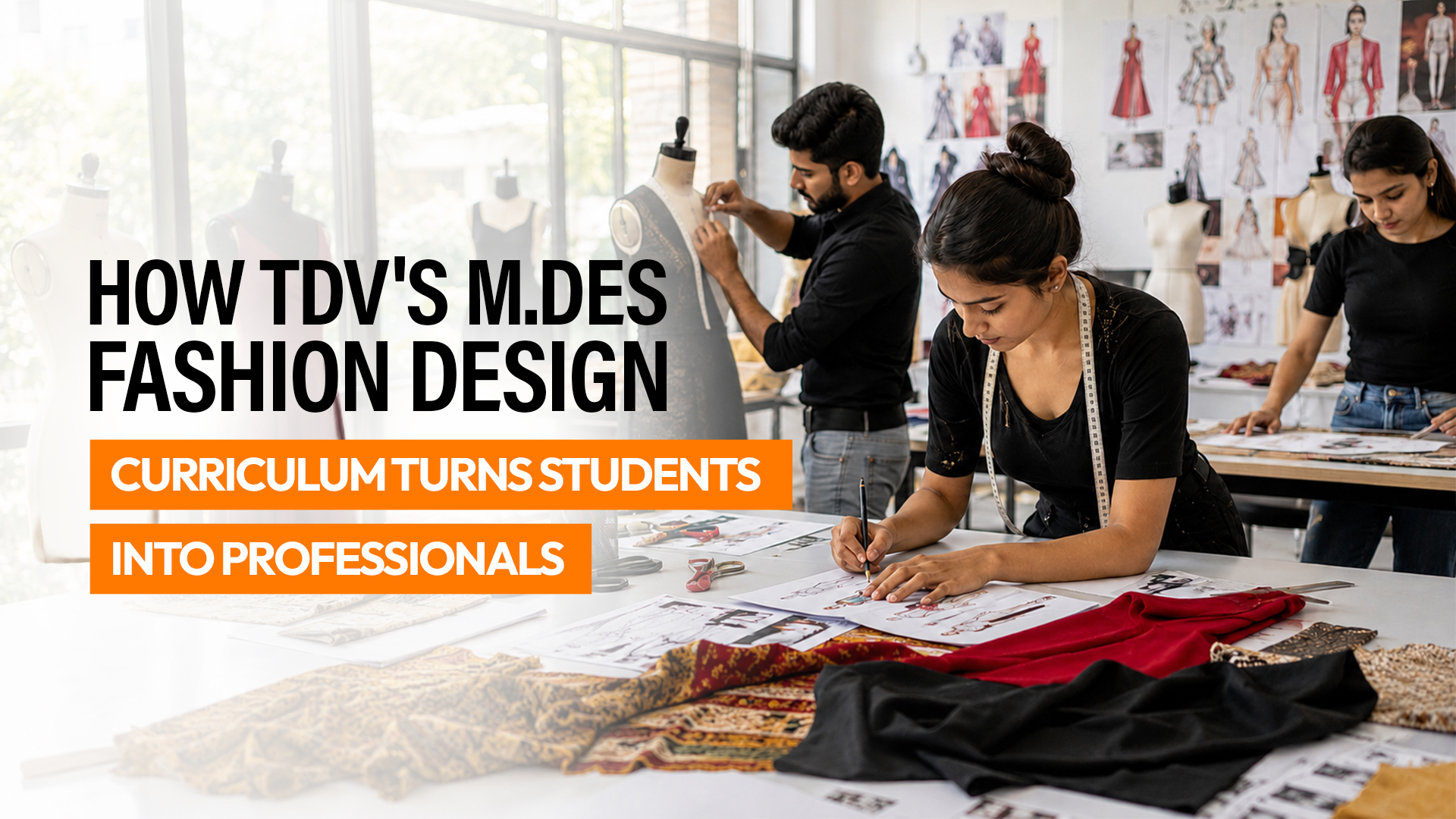
A good fashion design course extends beyond the classroom and enables students to gain insight into the industry at work. At TDV, exposure to the industry is not restricted to the last semester or a single internship. Rather, it is carefully woven into the fabric of the M.Des in Fashion Design program, where students can get hands-on experience while studying.
Students have the opportunity to explore various facts of the industry through internships, live projects, designer interactions, industry collaborations, and fashion events and trade fairs. They develop the skills to work within time limits, work in teams, meet client and market needs, and appreciate the real-world issues of moving a design from concept to production. This ongoing exposure not only equips students with creative confidence, but also with a real-world knowledge of
the fashion industry, which is why M.Des at TDV is a preferred choice for students looking for a program that combines academic excellence with real-world learning.
The Final Thesis Becomes the First Step Towards a Professional Career
The final thesis at TDV (The design Village) is not just a graduation project; it’s a chance for the students to show how they have developed as designers during the course. The process of concept development research, through to material selection, collection development, and final presentation, mirrors the manner in which professional fashion collections are planned and executed. Students are encouraged to develop their thesis with the same level of commitment, creativity, and attention to detail that is expected in the industry.
By the end of the program, this project becomes much more than an academic submission. It serves as a professional portfolio that showcases a student’s creative thinking, technical skills, research process, and ability to manage an end-to-end design project. Whether applying for internships, full-time roles, or starting their own design journey, students graduate with a body of work that reflects not only their talent but also their readiness to contribute confidently to the fashion industry.
Choosing the Right M.Des. Program Goes Beyond Rankings
When comparing an M.Des. in Fashion Design, look beyond campus facilities and rankings. Focus on what truly shapes your career: a curriculum that offers practical learning, industry exposure, experienced faculty, and opportunities to build real-world skills alongside creativity.
The M.Des at TDV is designed with this approach, helping students develop the knowledge, confidence, and professional experience needed for the fashion industry. Before making your decision, explore how the curriculum aligns with your career goals and the kind of designer you aspire to become.
Final Verdict
A strong M.Des. in Fashion Design is not just a degree; it’s a journey towards acquiring the skills, confidence, and industry insights necessary for a successful career. Whether it’s hands-on experience, faculty guidance, or exposure to the real world, every aspect of the curriculum contributes to the development of future professionals.
The M.Des at TDV follows this approach by creating a learning experience that prepares students for the realities of the fashion industry. Selecting a curriculum that nurtures creativity and professional growth can be the stepping stone to a successful career for aspiring designers.
FAQs
1. What makes the M.Des at TDV different from other fashion design programs?
The M.Des at TDV focuses on practical learning, industry exposure, faculty mentorship, and project-based education. The curriculum is designed to help students develop both creative and professional skills required in the fashion industry.
2. What skills can students develop through an M.Des. in Fashion Design?
An M.Des in Fashion Design helps students strengthen design thinking, research, trend forecasting, collection development, sustainability practices, portfolio building, and presentation skills while gaining valuable industry exposure.
3. Does the M.Des at TDV include industry exposure?
Yes. Students gain industry experience through internships, live projects, collaborations, workshops, guest sessions, and interactions with design professionals, allowing them to understand how the fashion industry works beyond the classroom.
4. How does the final thesis help students prepare for their careers?
The final thesis allows students to apply everything they have learned throughout the program. It becomes a professional portfolio that showcases their creativity, research, technical skills, and ability to manage a complete fashion design project.
5. Why is the curriculum important when choosing the best M.Des college in Delhi NCR?
A well-designed curriculum ensures that students develop practical skills alongside creativity. When comparing the Best M.Des colleges in Delhi NCR, it is important to evaluate the learning approach, industry exposure, faculty guidance, and opportunities for professional growth.


