


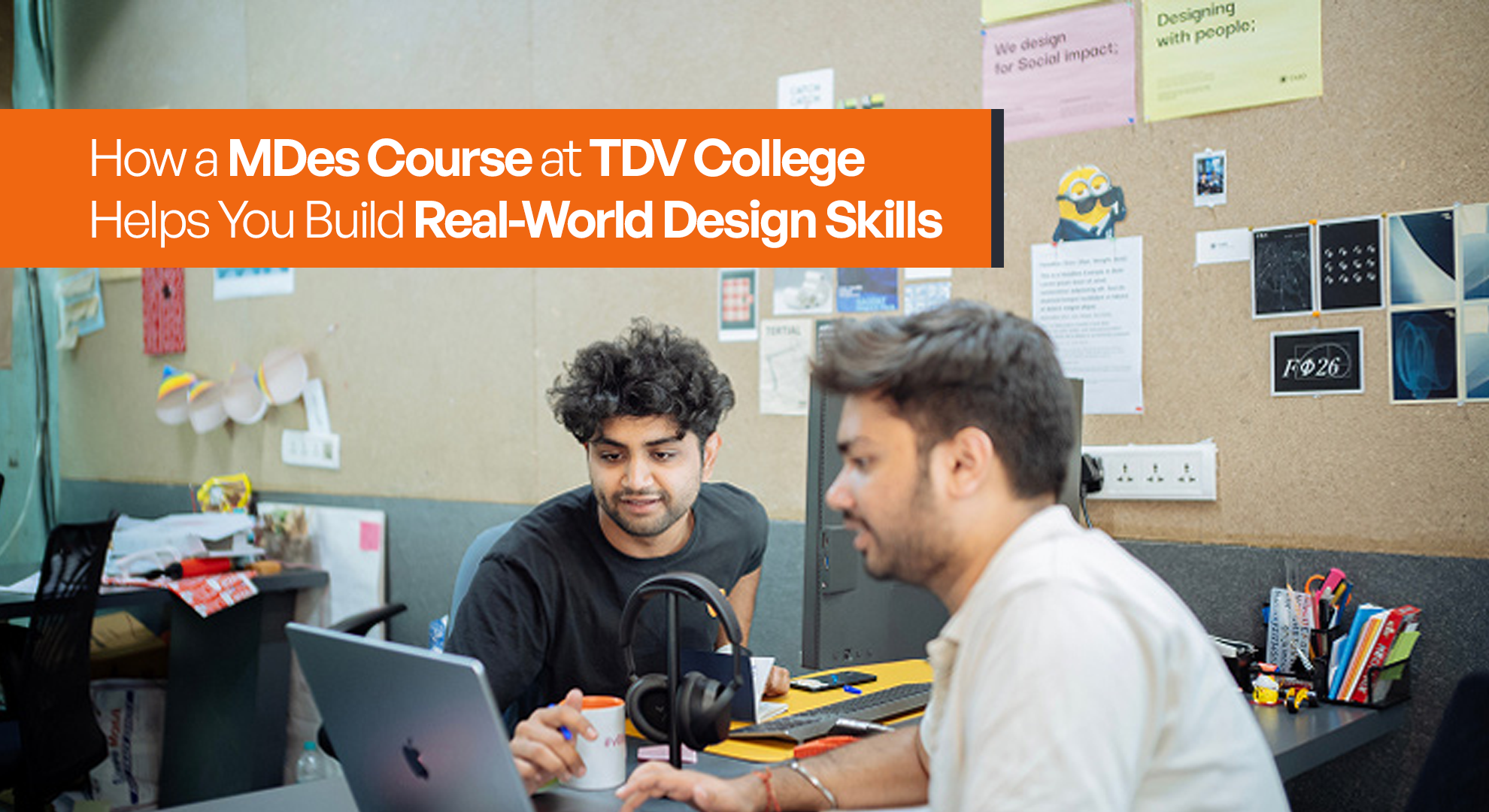
What is the best measure of a successful master’s in design? It’s not the syllabus or curriculum, but the paths and futures of its graduates. The Design Village (TDV) is one of the premier M.Des colleges in Delhi NCR and boasts some of the most diverse and impactful paths of its alumni.
The evidence is in the outcomes. Graduates from TDV’s M.Des classes are taking what they have learned from the program to their next level, whether it’s about landing high-profile jobs or starting new companies. They are:
- UX designers at prominent technology companies.
- Owners of independent design studios and consultancies.
- Design researchers and catalysts for innovation at major corporations.
What Makes TDV’s MDes courses Way Better Than Ordinary Design Programs
In this era, design education is no longer a place to listen to long lectures around color theory. The world of design is fast, creative, hands-on, and never the same day after day. This is just like how The Design Village (TDV) approaches its M.Des program—contemporary, flexible, and in sync with the real world.
At TDV, students do not only learn about design; they live design. The program promotes exploration between disciplines, such as combining communication design with sustainability or product design with emerging technology. Students can even work on projects that use design to innovate or change the world to address real issues, such as environmental issues or social impact design.
Let’s take a look at how TDV stands out in helping you build world-class design skills:
- Live Projects, Not Just Pretty Portfolios
At TDV, students don’t design for imaginary clients; instead, they design live projects with NGOs, startups, and creative studios. `Those projects require students to empathize with actual people and situations, manage timelines and budgets, and facilitate feedback like professionals.
By the end of your course, your portfolio isn’t just filled with class assignments; it is proof you have addressed real-world challenges and made a positive impact.
- Mentors Who Treat You Like a Team Member, Not a Student
TDV’s mentors are not just teachers; they are designers, entrepreneurs, and consultants with experience in the real world.
Mentorship aligns more with teamwork at TDV. You will be able to talk, think, and try things with your mentors, learning in real time from someone who knows what it’s like to have a creative block, a demanding client, or a deadline.
- Design Workshops and Competitions: Where Theory Meets Hustle
TDV is quite fast-paced when it comes to innovation and creativity. During design workshops and competitions, students work together to solve complex problems in just a few days.
This is a space for you to prototype, fail, and rebuild, and for you to understand that great design is not about getting it right at the first attempt. It is about improving each time. These experiences will teach you to think fast, work with others, and react quickly to change, which is the most valuable skill every creative company looks for.
- Industry Tie-Ups Put Your Ideas in the Spotlight
TDV partners regularly with industry and designer studios, bringing real-world problems and challenges directly into the classroom. You will learn to present ideas, receive positive feedback on your presentation, and explore how to develop and improve your work to meet industry standards.
These projects naturally lead to internships, freelance options, or full-time roles. You will have a significant advantage before you even graduate.
-
Builds a Global Network (Before You Even Graduate!)
Design is global today, and TDV prepares you to be part of that world. Through international collaborative experiences, global design projects, and exchange opportunities, TDV connects students to other students and mentors in other countries. The experience is exciting and educational—helping you understand how a different culture’s approach to design, sustainability, or invention positively affects your development as a designer with a true global perspective.
-
The ‘Experiment First’ Mindset
TDV cultivates curiosity and experimentation as a part of the design culture. You are encouraged to, at times, take some risks, try some outrageous ideas, and learn from less than favorable conditions. You get to enjoy this experiment-first mindset and build creative confidence and resilience, the traits that distinguish great designers.
Instead of being afraid of mistakes, you just make them and let that be the start of something better and smarter.
-
Success Stories: From Sketches to Startups
The true sign of the success of TDV’s M.Des program is shown in what students do after graduation. Some deploy their M.Des training as UX designers with global tech companies, and others have grown their small studios or follow careers as various types of design researchers and are establishing themselves as innovators in the company setting.
While every student success story from an M.Des program is unique and varied, what they have in common is the theme of having some strength of resilience learned from practical experience and experimentation, and tackling design problems in real time.
Conclusion
A masters in design course is far more than a regular postgraduate degree; it is a journey worth taking to help you actualize your ideas. Among MDes colleges in Delhi NCR, The Design Village (TDV) has one of the most immersive and industry-prescribed MDes curriculums in the country.
In TDV’s MDes curriculum and module, learning design means doing ‘design.’ You are experimenting, collaborating, and working in terms of project ‘live’ to prepare you for what really happens in the design and creative worlds. It is not just about building a great portfolio; it is about creating the mindset to solve real problems through design, creativity, and future innovation.
Therefore, regardless of whether you want to work with leading design studios, become a UX designer or just want to start your own creative business, TDV’s Masters in Design provides you with the tools, confidence, and exposure necessary to achieve it. Because ultimately great design is about more than what you make; it’s about what you make possible.


