


Introduction
Let’s be real — exploring design careers in 2026 can feel exciting and confusing at the same time.
You start by searching for one creative field, and suddenly your screen is filled with terms like UX Design, Strategic Design, Product Design, and after a point, everything starts blending together.
Let’s help you clearly understand the real difference between these two design fields.
Because from the outside, Strategic Design and UX Design both look creative, modern, and innovation-focused. Both involve solving problems, understanding people, and creating better experiences. But once you look beyond the fancy design terms, you realize they actually work in very different ways and focus on completely different goals
So What’s Strategic Design Then?
Strategic design sits at the intersection of design thinking and business strategy. It’s less about individual screens and more about the whole ecosystem — What problems should this company solve? What does the brand stand for in 5 years? How do we design not just products, but systems and services?
Strategic designers often work at a senior level or as consultants. They’re in the boardroom as much as the design room. They’re thinking about innovation, market positioning, and organizational change — using design as a lens for decision-making.
What strategic designers focus on:
- Business model innovation — rethinking how value is created
- Service design — mapping entire customer journeys end-to-end
- Design strategy — aligning design work with company goals
- Systems thinking — looking at how everything connects
- Stakeholder alignment — getting leadership and teams on the same page
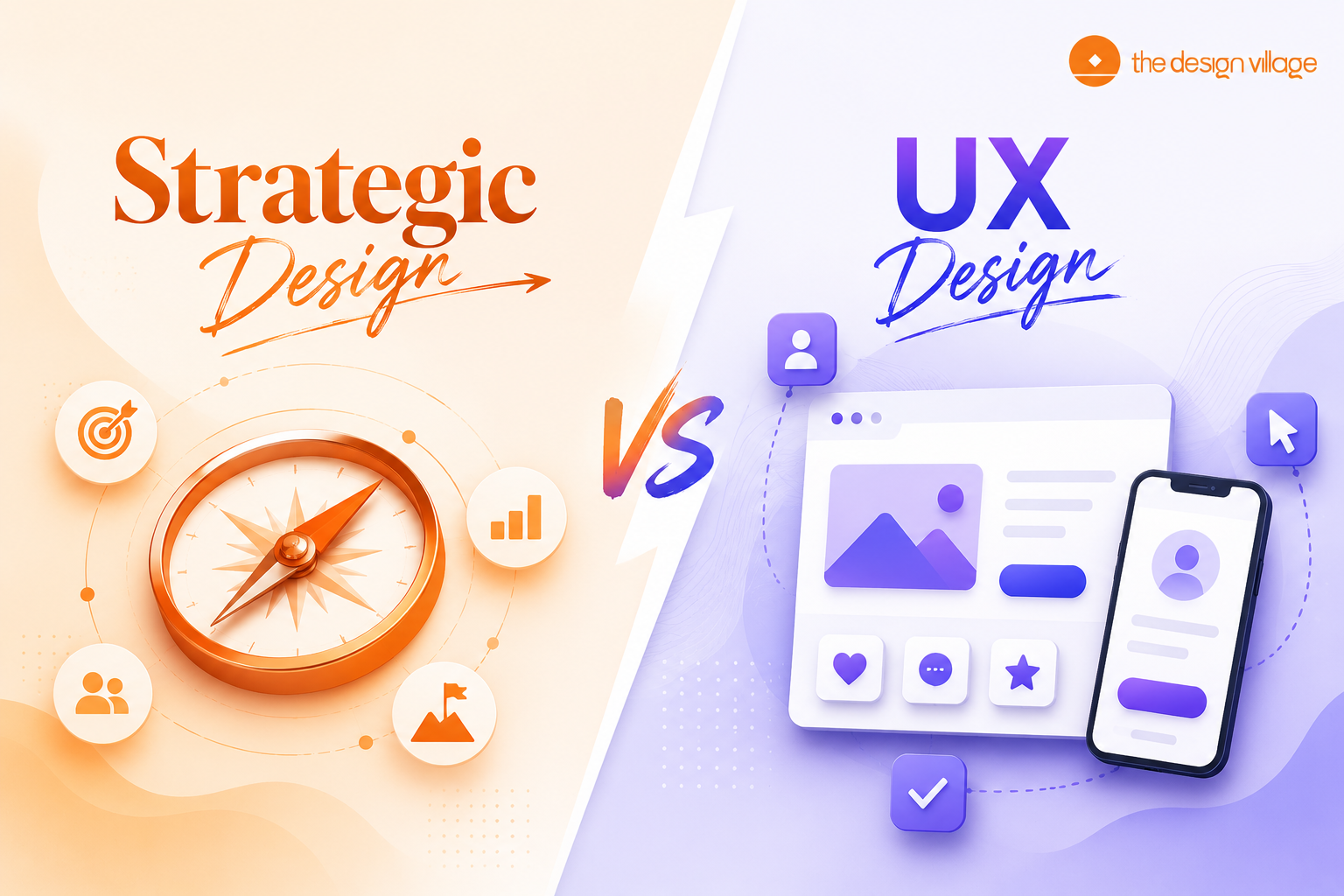
The Real Difference Between Strategic Design & UX Design
| Feature | Strategic Design | UX Design |
| Main Focus | Business strategy + innovation | User experience + usability |
| Goal | Solve long-term business problems | Improve product interaction |
| Works On | Systems, services, business models | Apps, websites, digital products |
| Thinking Style | Big-picture thinking | User-centered thinking |
| Involves | Research, market analysis, branding, innovation | Wireframes, prototypes, user testing |
| Typical Work | Creating strategies for future growth | Designing smooth digital experiences |
| Skills Needed | Critical thinking, research, systems thinking | UI/UX tools, empathy, interaction design |
| Career Roles | Strategic Designer, Innovation Consultant, Design Strategist | UX Designer, Product Designer, Interaction Designer |
| Tools Used | Research frameworks, workshops, strategy mapping | Figma, Adobe XD, usability tools |
| Best For Students Who Like | Business + creativity together | Digital products and user behavior |
What Is UX Design?
Ever opened an app and just knew what to do without thinking twice?
That’s UX Design.
UX Design (User Experience Design) is the process of making apps, websites, and digital products easy for people to use. It’s all about removing confusion and helping users complete their tasks smoothly.
A UX designer looks at things from the user’s point of view—what feels easy, what feels confusing, and what needs to be improved. Then they design the product in a way that guides people step by step without making them think too much.
In short, UX Design is simply about making digital products easy, clear, and stress-free to use.
What Does a UX Designer Actually Do?
UX designers combine creativity, psychology, research, and problem-solving to build better digital experiences. Their work often includes:
- User Research — Understanding user needs, behaviors, and pain points
- Wireframing — Creating the basic structure and layout of a product
- Prototyping — Building interactive models before development begins
- User Testing — Observing how real users interact with the product
- Information Architecture — Organizing content in a clear and logical way
- Interaction Design — Designing smooth and intuitive user interactions
Strategic Design vs UX Design: The Real barriers
A lot of students assume Strategic Design is just a “more advanced version” of UX Design. But that’s not really true. The difference isn’t about difficulty — it’s about how deep the impact goes and where the design thinking is applied.
At a glance, both feel similar because they involve research, problem-solving, and understanding people. But once you look closer, you’ll notice they operate at completely different levels.
UX Design Focuses on the Product Experience
UX Design is centered around improving how users interact with a product in their everyday experience. Its main goal is to make digital products simple, intuitive, and easy to navigate so users can complete tasks without confusion or frustration.
At its core, UX Design is about enhancing what users directly see, feel, and experience while using a product.
Strategic design focuses on the product experience
Strategic Design, especially within an M.DES course (Master of Design), goes beyond the product itself and looks at the larger vision behind it. Instead of only improving user interaction, it focuses on solving broader business challenges through innovation, systems thinking, and long-term planning.
Within an MDES course, strategic designers are trained to think beyond screens and interfaces. They work on shaping services, business models, customer experiences, and future growth strategies. Their role is to connect user needs with business goals and create solutions that can drive meaningful transformation over time.
In simple terms, Strategic Design in an MDES course focuses on the bigger ecosystem that influences how products, services, and businesses evolve.
So, Which Design Path Fits You Better?
If your passion lies in crafting digital experiences and improving how users interact with technology, UX Design could be the right fit.
But if you want to think beyond interfaces and create long-term impact through innovation, business strategy, and design leadership, a Strategic Design Management course or an MDes course can open broader future opportunities.
In 2026, the design industry is not just looking for designers — it is looking for creative thinkers who can shape experiences, solve meaningful problems, and drive innovation forward.
Salary and Career Growth Comparison
One of the most common questions students ask while exploring an M.Des course or a Strategic Design Management course is Which career offers better growth and salary opportunities?
The reality is that both UX Design and Strategic Design Management offer strong career potential, but their growth journeys are slightly different. UX Design often provides quicker entry-level opportunities because of the growing demand in tech companies, startups, and digital product industries. On the other hand, Strategic Design roles usually grow through research, innovation, systems thinking, and business understanding ,which can gradually lead to higher leadership and decision-making positions over time.
Both paths have positive career outcomes, and the right choice depends on the kind of professional journey you want to build.
| Aspect | UX Design | Strategic Design Management |
| Career Focus | Creating better digital products and user experiences | Solving business, innovation, and customer experience challenges |
| Entry into Industry | Faster entry-level opportunities | Slightly gradual entry with research and strategic involvement |
| Industry Demand | High demand in tech companies and startups | Growing demand in global companies and innovation-driven industries |
| Work Style | More product, interface, and interaction-focused | More strategy, systems thinking, and business-focused |
FAQs
Is Strategic Design better than UX Design?
Not really. Both are different career paths. UX Design focuses more on digital product experiences, while Strategic Design focuses on larger business and innovation challenges.
Can a UX Designer become a Strategic Designer?
Yes. Many professionals start in UX Design and later move into strategic or leadership-focused design roles after gaining experience.
Is UX Design still a good career in 2026?
Yes, absolutely. UX Design remains one of the fastest-growing creative tech careers because companies constantly need better digital experiences.
Does Strategic Design require coding?
No, coding is usually not mandatory. Strategic Design focuses more on research, systems thinking, innovation, and business strategy.
Which is easier for students to start with?
UX Design is generally easier to start with because there are more beginner-friendly courses, internships, and project opportunities available online.


